


Hey everyone, I'm Jake, part of the team at a glass film PDLC supplier, and over the last few years, I've gotten a ton of questions from folks in the art world: "Can this switchable film stuff actually work in galleries?" Let's cut to the chase-yeah, it absolutely can. But it's not just a random trend; there's actual science and real gallery use cases that make it make sense. I've seen it tested, heard the feedback from curators, and worked on a handful of small projects that made me go, "Wait, this solves a problem I didn't even know galleries had."
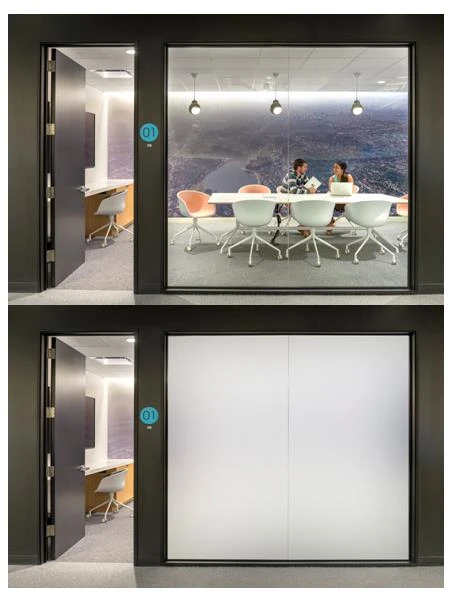

First, let's do a quick refresh for anyone who's new to PDLC glass film. For the uninitiated, PDLC stands for Polymer Dispersed Liquid Crystal, and basically, this film has tiny liquid crystal droplets suspended in a polymer matrix. When there's no electric current running through it, those droplets are scattered, so light bounces all over the place-making it opaque, like frosted glass. Flip the switch, and the droplets line up neatly, letting light pass right through-so it becomes clear. It's that simple. No fancy tech, just a cool, flexible film you can stick to any glass surface, which is why it's been blowing up for offices, home bathrooms, and now, art spaces. If you want to check out the basics, the PDLC Switchable Privacy Film page on our site breaks it down way better than I can ramble.
Now, why would an art gallery care about that? Let's think about common gallery pain points first. Galleries live and die by lighting-too much natural light fades paintings and photos, right? I've seen curators panic after a big show when a watercolor's edges are faded because the skylights were on for too long. But you can't just cover all the windows permanently because natural light makes art look better-warmer, truer to how the artist intended it, not just the harsh cool glow of track lights. That's where PDLC film becomes a game-changer. Because it's on-demand. You can hook it up to a timer or even a light sensor, so when the sun is at its brightest (10am to 4pm, roughly), you hit the switch and turn that glass from clear to opaque. The UV light is blocked when it's opaque, so no fading. Then, when the sun is softer-early morning, late afternoon-you flip it back to clear, and visitors get that beautiful natural light the artist wanted. It's not a compromise; it's a middle ground that solves two huge problems at once.
Wait, but what about specific areas of a gallery? Like, the spaces where they install temporary exhibits, or the back offices where they keep stored art that's not on display. Or those little nooks where they have small, delicate works-prints, lithographs, even vintage pieces that can't handle too much light. PDLC film works here too. Let's say a gallery has a small side room with glass walls for a pop-up show of fragile paper art. They can keep the glass clear during the show's opening, so people can see in and engage, but then switch it to opaque at night when the gallery is closed, to block any stray light from streetlamps or security lights seeping in and damaging the art. That's way easier than putting up a temporary curtain every night, right? Curators hate temporary stuff because it's a hassle to install, looks messy, and gets damaged quickly. PDLC film sticks like a normal window film, so you put it up once, and you're done.
Another big one: privacy for special installations. Some art is super intimate, or has parts that artists don't want the general public to see all the time. Like, a sculptor who made a piece that has two sides-one is bold and in-your-face, the other is a more vulnerable, detailed side that they only want people to experience when they're ready, not just walking past. Or a gallery that's hosting a private VIP opening, and doesn't want random visitors wandering into the back area where the VIPs are mingling with the artist. PDLC film lets you split a space dynamically. Use it on a sliding glass door or a partition wall, and with a single button press, you can make that wall disappear (clear) to open up the space, or turn it opaque to section off a private area. That's something traditional walls or curtains can't do-you can rearrange the gallery's layout on the fly, depending on the event.
I know what some of you are thinking: "Does PDLC film mess with the look of the art?" That's a valid concern. No one wants their beautiful painting next to a weird, cloudy glass wall. Here's the thing-when it's clear, this film is totally transparent. We've worked with a few galleries that put it over large floor-to-ceiling glass walls, and when the film is on, you can't even tell it's there. It doesn't distort colors or make art look off. And if you want an even more seamless look, we also have Black Smart Film which, when opaque, is a neutral, deep black instead of a frosted white. That's perfect for galleries because black is classic, doesn't clash with any art, and makes the space feel more sophisticated instead of like a bathroom. I've seen that black film used in a small photography gallery in Brooklyn, where they used it to cover the windows during the day to control light, and when it's opaque, it blended right in with their dark gallery walls-no one noticed the glass was there at all.
Wait, let's talk about durability too. Galleries get tons of foot traffic, people leaning on walls, kids (and adults) touching glass, moving chairs around. PDLC film is thin, flexible, and once it's installed correctly, it's pretty tough-way more durable than regular window film, actually, because the liquid crystal layer is protected by those polymer layers. I've had a gallery client tell me they've had a Electric Tint Smart Glass Film installed for over two years, and they've never had to fix a single bubble or scratch. It doesn't yellow over time, which is huge because yellowing can really change how art looks next to the glass. That's a big plus over older smart glass tech, which used to be way more fragile and would discolor after a year or two.
Another use case I recently got hyped about: museum gift shops or cafe areas attached to galleries. A lot of galleries have a cafe or a gift shop right next to the main exhibit space, but the cafe can be noisy, or has brighter lights, or just feels like a different vibe. If you have a glass wall between the cafe and the exhibit, PDLC film lets you close that wall off when you need quiet for the art, or open it up when you want to connect the two spaces for a event-like a book signing, where you want the author to be visible both to people in the cafe and the exhibit space. It's such a flexible tool that works for all kinds of gallery events, not just regular exhibits.
But I want to be real here-it's not for every single space. If a gallery has all interior walls and no windows, PDLC film isn't going to do much for you. Also, you have to have a power source, right? It's electric, so if you don't have outlets near your glass, that's an extra step. But for most galleries, which usually have big window areas and want to use natural light, it's a no-brainer. And installation is way easier than you'd think. We do custom cuts, so if you have weird-shaped windows or partitions, we can send Pre Cut Privacy Window Film that fits perfectly-no measuring mistakes, no wasting film. Our team also does installation for most projects, so you don't have to worry about messing it up yourself.
I've talked to curators who were skeptical at first, thinking it was just a gimmick. But after they test it out for a single show, they come back asking for it for the next one. One gallery in Chicago used it for a photography exhibit last year, and they reported that the UV fade on their prints was cut by 90% compared to their previous setup of just blinds. And visitors loved that they could get natural light without glare-you know how bad glare is on photos, making it impossible to see details. PDLC film cuts glare when it's clear because of the way the liquid crystals line up, so that's another win for the art and the viewers.
Let's also touch on accessibility, because galleries need to be ADA-compliant these days. Wait, is PDLC film accessible? Yeah, because you can hook it up to a simple switch, a remote, or even a smart home system so people can control it without reaching for a high switch. For people with mobility issues, that's a big plus-no climbing a ladder to adjust blinds, just a tap on a phone or a wall switch. It's small, but it matters for making galleries welcoming to everyone.
Now, I know some art purists might roll their eyes at "tech" in a space where everything is about the artist's vision. But here's the thing: PDLC film doesn't change the art-it changes the environment around the art. It's a tool to protect the art, enhance how it's seen, and make the gallery's space work better for both curators and visitors. It's not sticking a screen in the middle of a painting; it's adapting the glass that's already there to fit the needs of the show.
If you're a gallery owner, curator, or anyone working in the art world, and you're curious about testing this out, we've done small test installations before so you can see it in your own space before committing to a full project. We can also walk you through the electric options-like, do you want it hardwired, or with rechargeable batteries if you don't have easy power? The Electric Glass Film page has more details on power setups, so you can figure out what works for your space.
At the end of the day, galleries are all about creating great experiences for art lovers and supporting artists. PDLC film fits right into that-its flexibility means you can adapt to different exhibits, protect work from damage, and make the space feel intentional, not just like a box with paintings. I've seen it work firsthand, and I think more and more galleries will start using it as they realize it's not just a trend, it's a practical, reliable tool.
If you're looking to chat more about how PDLC film could work for your gallery, hit us up to connect. We can answer questions, send samples, or walk through project details-no pressure, just honest feedback from people who've worked with galleries of all sizes.